
“Whoever shuts himself up within four walls ends up losing the faculty of associating ideas and words.” (Jules Verne, Journey to the Centre of the Earth)
The first question a tourist asks when planning a journey or a holiday is probably: “How long will it take?”. But anyone who has decided to travel by bicycle already has the answer: “The time it takes”. Visiting places rich in ancient and modern history, in traditions, means making a choice that is not tied to the length of the trip but to the quality of the places visited and the encounters made. There are places suspended between a very distant past and a future that is already here. The land around Monterotondo Marittimo holds all of this: a base from which to come into contact with the primordial forces of the earth. In this corner of Tuscany, visiting means exploring and getting lost, letting yourself go among Dantesque landscapes, endless woods and open horizons.
Between churches and geysers, surrounded by lush nature, wrapped in countless legends and rich in stories and traditions, Monterotondo Marittimo is the ideal base for tailor-made activities, whether cultural visits, outdoor excursions or both. Here the word “tourism” no longer swings between freedom and consumption: it becomes the sustainable synthesis of a journey made of knowledge and encounter, in every month of the year. From Monterotondo start many routes for MTB, gravel and road bikes, trekking paths, nature and history trails.
The routes, suited to every taste and with different levels of difficulty, include fast, flowing tracks and more technical ones: different ways of crossing the territory, to build a different experience every day within the continuity of a landscape still intact, to be discovered a little at a time. The paved roads carry little traffic and follow the natural contours: soft curves, regular climbs, descents that let you look around without hurrying.
The hinterland, unique and fascinating, has much to offer in culture, history and cooking. The local people are kind and welcoming. The low-traffic itineraries, spread across the surrounding villages and marked on dedicated maps, differ in length and difficulty; they can be consulted both here, in the four official routes of the Monterotondo Ride Base Pack, and on the municipality’s tourism portal.
Riding up to Monterotondo Marittimo
To reach Monterotondo Marittimo by bicycle you have to climb into the hills, along solitary roads without traffic; the village is glimpsed from afar, set among thick woods, perched on the hilltop. Leaving the horizontal line of the sea behind, ahead opens a horizon of curved hill profiles, in balance with the curves of the quiet road. The noise of cars is rare. Silence takes over and sets the rhythm of the pedalling. The pace slows as you go, so you can enjoy the changing colours: behind, the glittering ribbon of the sea ever further away; around, the dense green typical of the Maremma woods; ahead, the silver of the clouds against a sky as intensely blue as a cloak in a Renaissance painting.
The silence forms a layer of peace, the green of the Mediterranean scrub screens the light, the road lies in shade and the rider grows more focused: the feeling becomes meditative. You cross a landscape that changes little by little. The bends tighten, the woods thicken, the pedal stroke is paced by an earth that begins to pant; among the gentle wooded hills you catch sight of the boraciferous steam vents. The road crosses this landscape discreetly. There is no traffic, there are no great tourist flows. Only bends, silence and that feeling of having entered a place where time runs at a different rhythm. The side roads seem made for those who move slowly. The most frequent sound remains the air passing through the trees and the spokes of the wheels. After so many bends and climbs, staying a few minutes in silence becomes almost inevitable, in a place where space still dominates.
The village of steam vents, Biancane and boron
And then, finally, you enter the village, its stone houses following the line of the land. Mons Ritundus in late Latin, then Monte Ritondo, and finally Monterotondo: the epithet “Marittimo” does not concern the sea, which on certain clear days can be seen from one of the many viewpoints, but literally means “of Maremma”, added in the early twentieth century to indicate its position in the coastal hinterland. Rich in history, this splendid village stretched out in the green looks over the Gulf of Follonica. From the natural terrace of the village the gaze can travel far: the rolling hills of the Maremma, the woods and, on clear days, even the line of the sea.
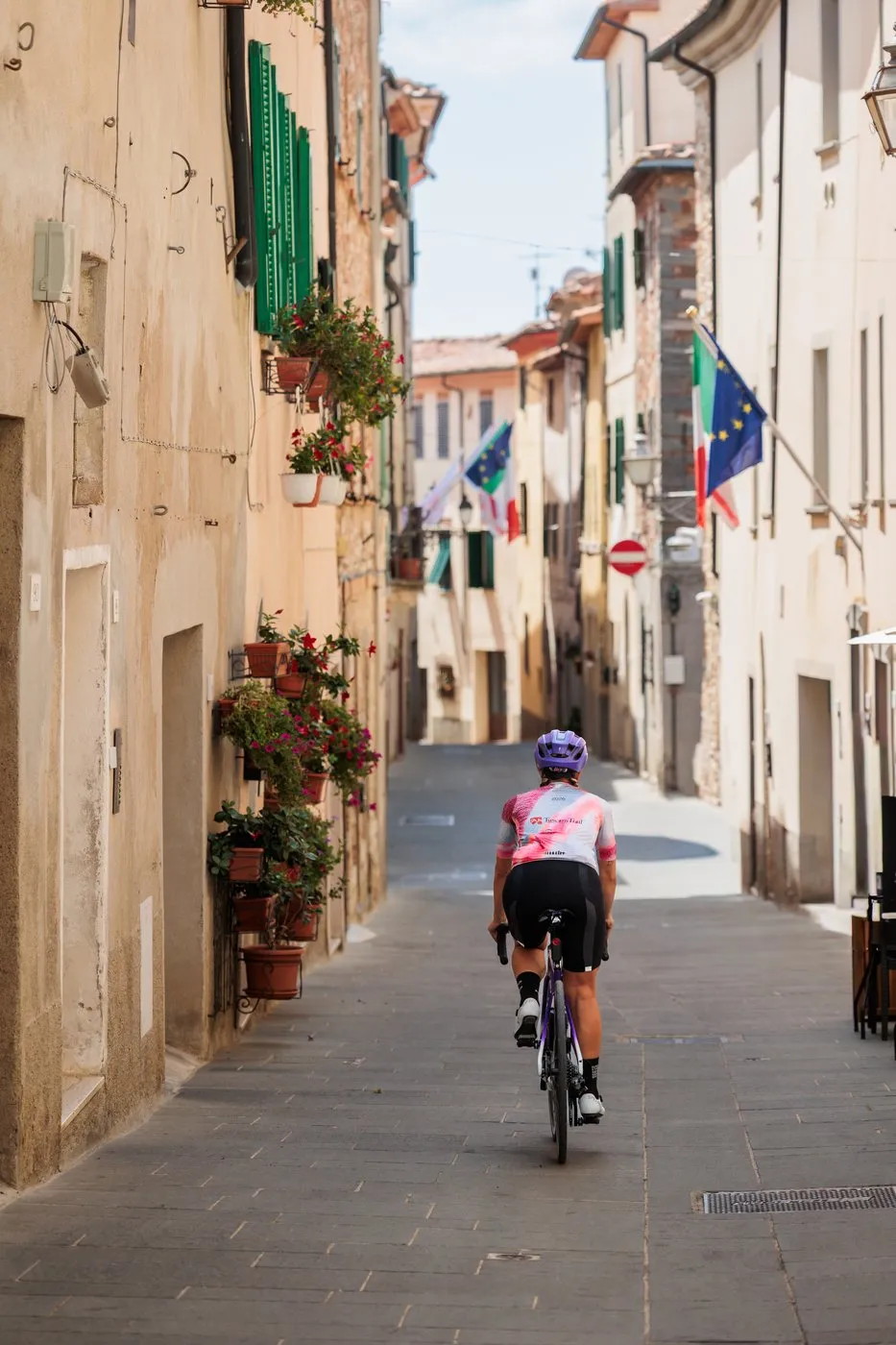
In the village, narrow lanes and houses so close they seem joined. These are places that add depth to a journey. It is a destination far from mass tourism: no queues, no squares packed with tourist café tables. And that is precisely its charm. Not only nature, but memory, conviviality and good living: the keeper of a deep bond with its roots. It is a destination for those seeking calm, beauty and a sincere contact with the territory, and for that very reason it deserves to be known better.
Monterotondo is known as the village of the steam vents, the Biancane and boron. It began as a castle and the historic centre still follows the line of the ancient walls. Piazza Casalini, as in every Italian village, is the heart of the place. The Town Hall and the clock tower, in the typical amber colour of the local stone, together with the Palazzo delle Logge and their alternation of projecting and receding volumes, give an idea of movement; indeed, the main streets start from and converge on the square.
The Logge and the Town Hall
The loggia, with its stone columns topped by Doric capitals, is a place for meeting and rest: here people arrange to meet, or gather to spend a moment of the day talking, sheltered from the sun in summer and from the cold in winter. Starting or finishing point for excursions, the square is the heart of village life.
On the ground floor, a window framed in pietra serena keeps a wrought-iron grille shaped for the payment of tolls. Opposite the Logge, in a niche, is a votive image which, according to medieval tradition, protects the crossing of the four streets that meet there, a place where devils and witches were thought to gather.
Some plaques in the corridor of the Town Hall recall figures who passed through Monterotondo and are celebrated for their ideals of justice and freedom: among others, Giuseppe Mazzini, Pietro Gori and Giordano Bruno.
Chiesa di San Lorenzo
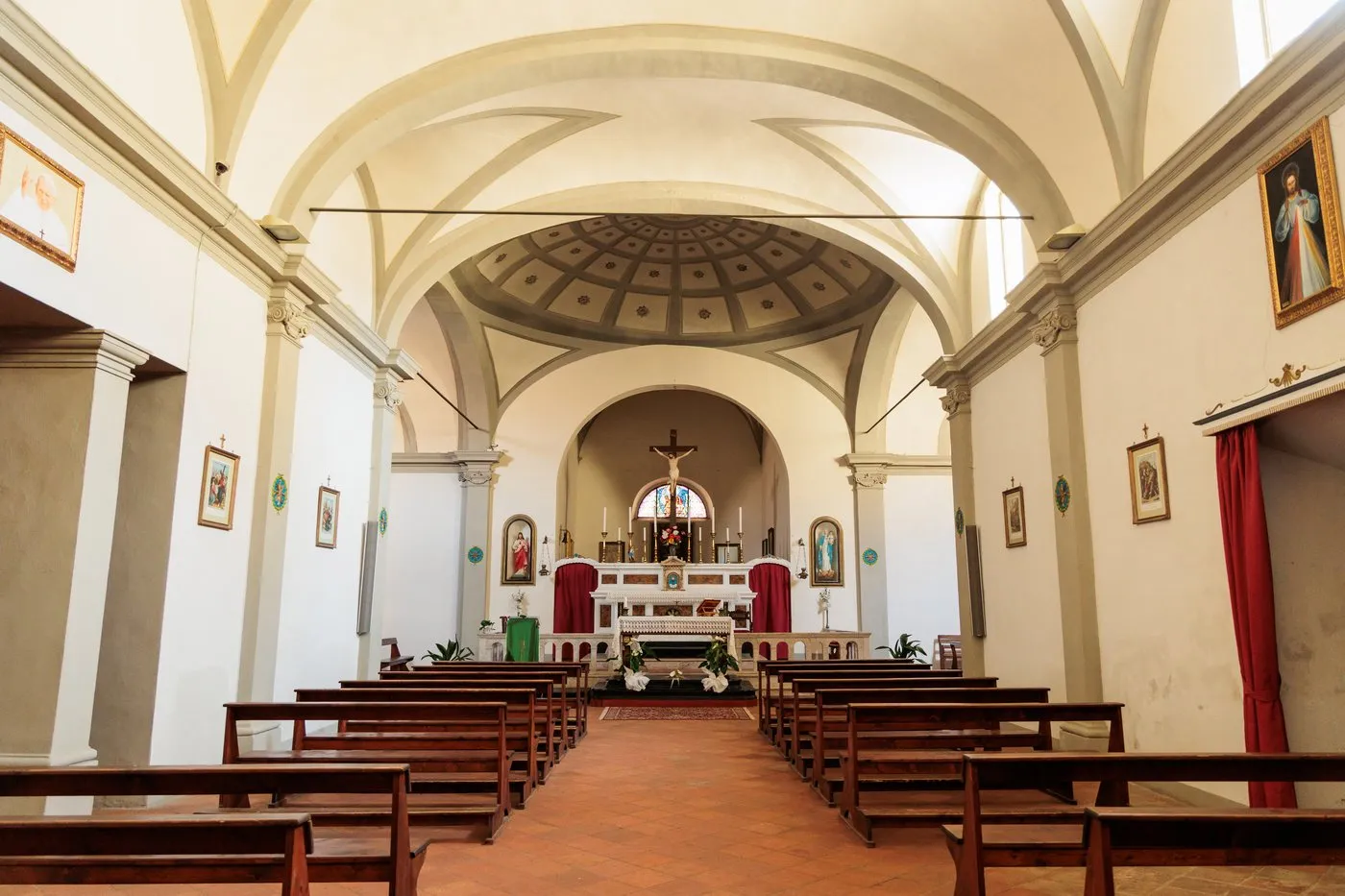
In a small triangular square stands the church of San Lorenzo Martire, with its gabled façade and a single nave under a barrel vault. Here a fourteenth-century panel is kept, the Madonna and Child, venerated as the Madonna delle Grazie and invoked as protector against misfortunes of every kind. As the many ex-votos show, some of them precious or embroidered by hand, popular devotion is still deeply felt; the Madonna is remembered with a solemn feast on the last Sunday of May.
A narrow passage between the church and the rectory opens onto one of the many views to be admired from the village: on the left the iconic cooling tower, by now the symbol of these parts; opposite, the landscape of the Biancane, with plumes of steam rising from the earth.
Teatro del Ciliegio
A small theatre preceded by an enormous cherry tree that seems to serve as the entrance to this graceful cultural space. On the door, the drawing of a cherry branch converses with the real tree; white, pastel yellow, terracotta and light blue are the shades chosen by the recent restoration, in harmony with this land. The interior, modern and elegant, hosts cultural events in every season.
Casa di Fucini
The rooms devoted to the literary history of the writer born in Monterotondo deserve a visit for the modernity of the display, housed in the village’s former oil mill, today the new home of the library.
Rocca degli Alberti
Beside the theatre a path leads to the Rocca degli Alberti, the castle from which the present village originated. Set on the highest part of the town and built of aligned stone blocks, it comprised the lord’s palace, a watchtower, a water cistern and the keep.
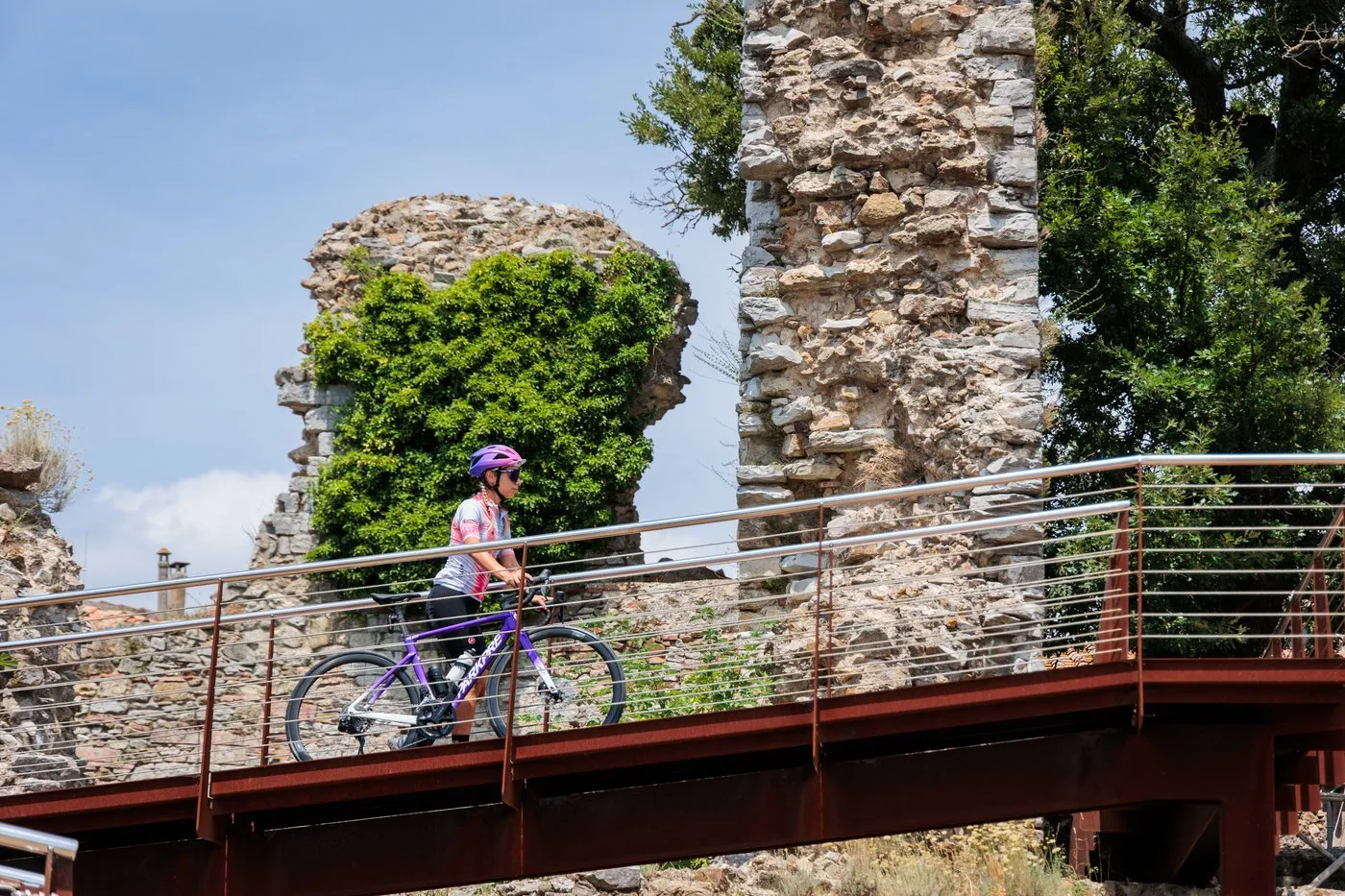
Built in 1336, it was almost completely destroyed by Florentine troops during the war against Siena. The ruins have been restored, and the walls still standing are a window onto the ancient soul of the village: a testimony of the past that fits perfectly into the landscape of the public park of which it is now part.
Panorama Garibaldi
Viale Garibaldi and via Solferino form a panoramic ring around the village. From viale Garibaldi in particular, thanks to an extraordinary natural terrace, you can see, towards the sea, the Gulf of Follonica and a large part of the Tyrrhenian coast, from Piombino to Orbetello.
Here, in the shade of old holm oaks and acacias, stands the bust of Giuseppe Garibaldi, who passed through Monterotondo one September night in 1849 during his flight after the fall of the Roman Republic and the death of his wife Anita. Hunted by the French, papal and Austrian armies, he managed to cross the whole of Tuscany thanks to the help of countless anonymous citizens.
A village built for riders: pump track, e-bike stations and a 90 km loop
In Monterotondo Marittimo tourism is spread across the territory, thanks to the integration of tourist and sporting offers, of nature and history. A good practice of sustainable tourism, in step with the new trends that see outdoor activity as the way to discover a place.
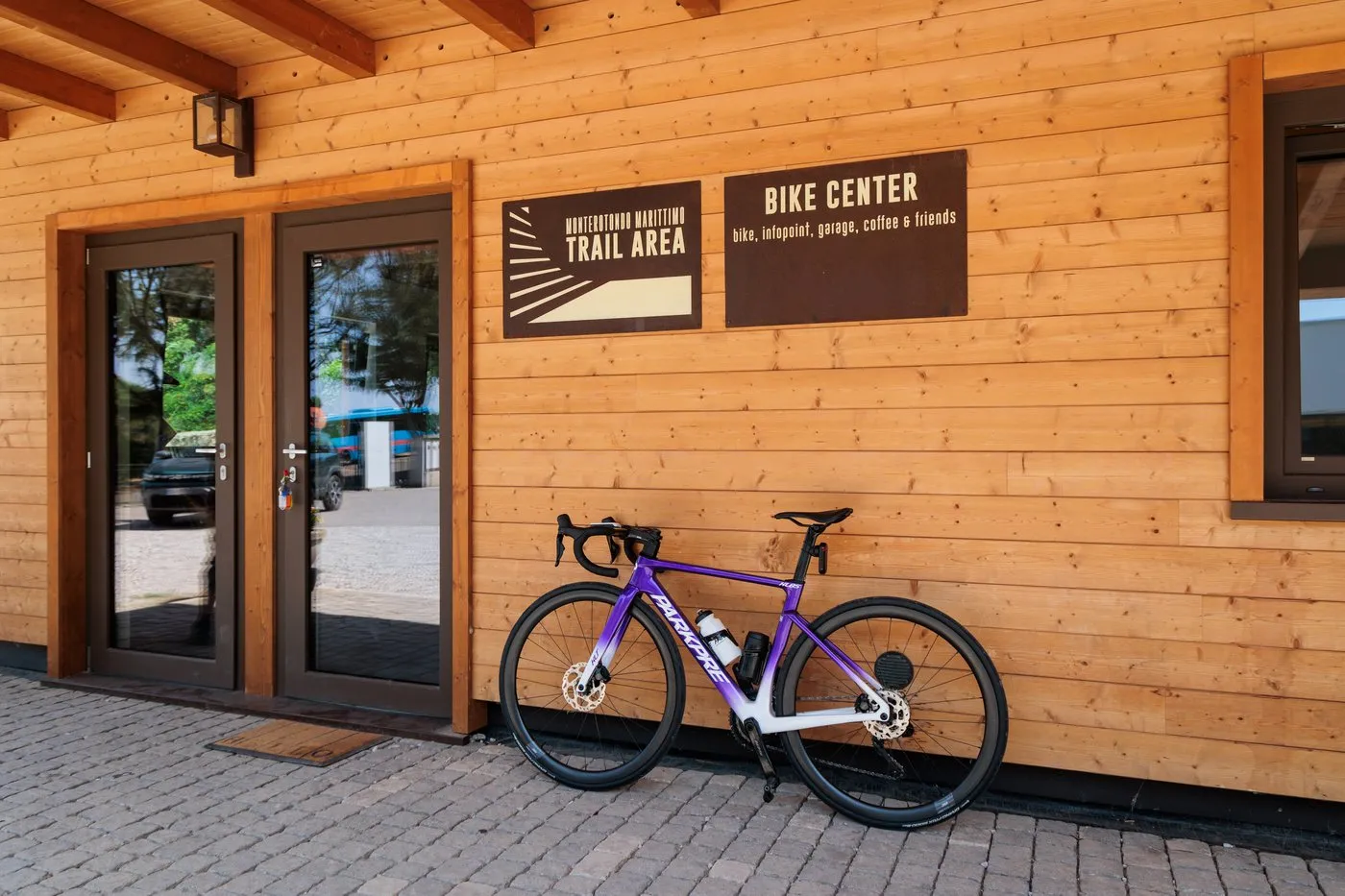
Routes are digitised and there are services dedicated to cycle tourists, with new equipped cycling stretches, rest stations with e-bike charging, dedicated information points and infrastructure accessible to anyone who chooses to travel by bicycle.
Just outside the village, near the sports hall, there is a 1,500 metre pump track in two sections: the first, parallel to the Biancane area, follows the natural shape of the ground; the second is a restored and secured trail to which flow segments have been added to make the ride even more engaging.
A 90 kilometre loop has also recently been inaugurated, linking the municipalities of Massa Marittima, Monterotondo Marittimo and Montieri, with 14 rest areas and 10 mechanical assistance stations equipped with basic tool kits; two of them also offer e-bike charging.
Throughout the year, food and cultural events make Monterotondo one of the destinations of quality tourism in every season: music festivals such as “Musica a Tutto Vapore”, the sagre devoted to sheep and pork in July, or to the tortello maremmano in June.
On 10 August, the day of San Lorenzo, patron saint of Monterotondo, the districts dress in the colours of their banners; craft markets are set up and the streets relive a medieval atmosphere, with figures dressed as innkeepers, acrobats, nobles and peasants, up to the traditional historical procession.
Among the most heartfelt occasions is the Festa di San Vincenzino, celebrated the first week after Easter, whose protagonist is the great bonfire lit near the Rocca degli Alberti. Or the Festa della Castagna, on the last Sunday of October, when ballotte and frogiate, boiled or roasted chestnuts, are prepared together with castagnaccio and the other typical products of the Maremma autumn.
Where the earth breathes: the Biancane geothermal park
Leaving the village northwards you reach the Biancane geothermal nature park, home to the Geomuseum of the Biancane and to two lagoni, among them the Lagone Cerchiaio. The latter takes its name from the ancient use of its hot waters in the Middle Ages, when they were used to bend chestnut wood for barrel-making. Here you can still see the old wash-houses of the 1930s, with their typical octagonal bricks.
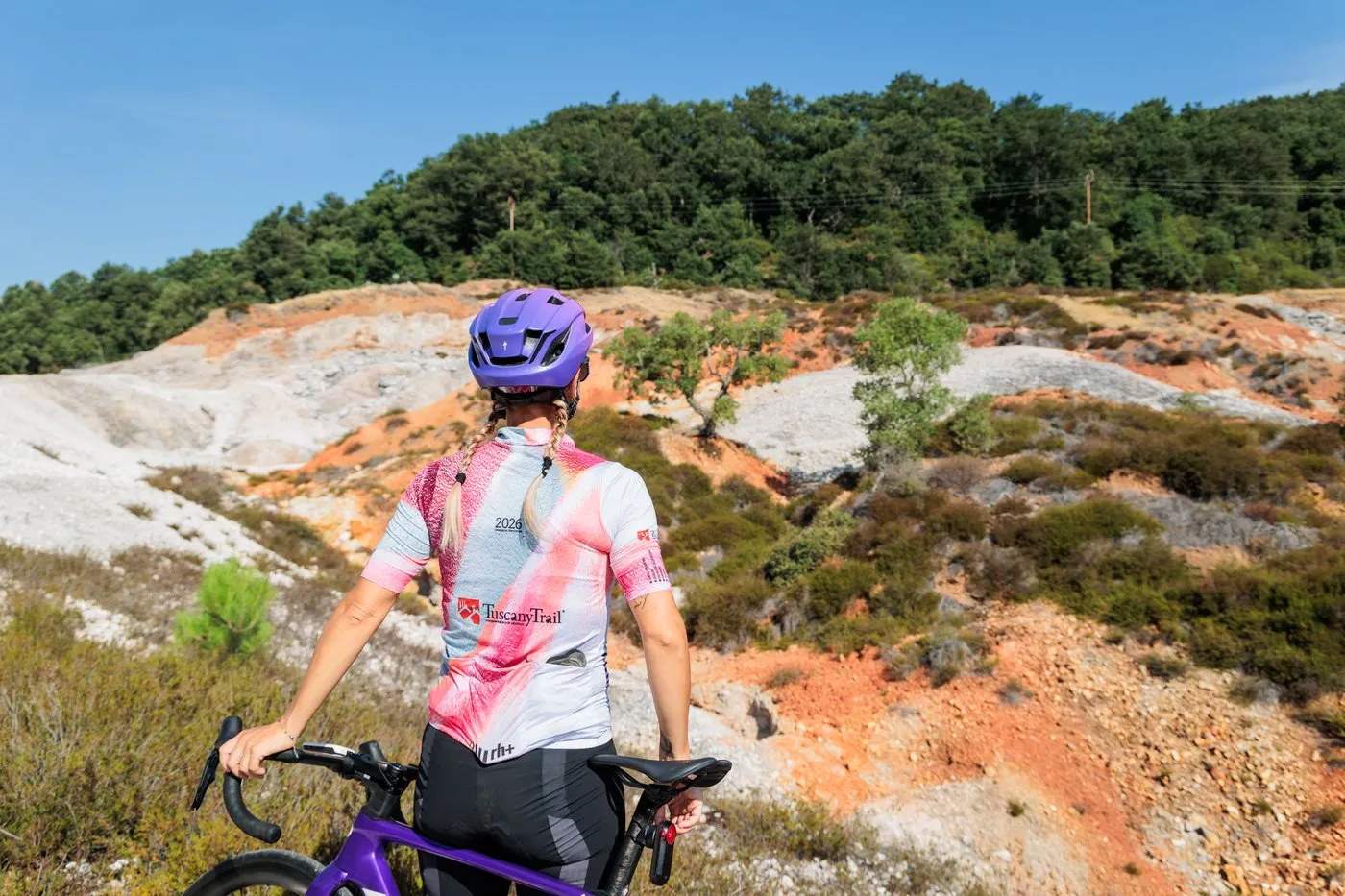
Along the Biancane trail you meet many geothermal wells, the first free-steam power plant of 1946, the thermal spring “Acqua di Chiorba” and the district heating plant.
In recent years geothermal energy has found new uses: many local businesses harness the heat of the earth for the production and ageing of products such as oil and cheese, as Podere Paterno and the Tanda farm do. The combined use of photovoltaic and geothermal systems also allows a high degree of energy self-sufficiency with minimal environmental impact.