
Such coveted places demand gentle exploration and mindful presence—essential elements for any traveler, whether carrying panniers, bikepacking gear, or a simple waist pack. This awareness reflects the area’s commitment to preservation through sustainable tourism, as seen in daily visitor limits to spots like Cala Violina.
The Coves route and the Costiere path
Though the terrain’s continuous earthen and gravel ups and downs hint at fatigue, reaching Scarlino’s coast via the Coves route—the southernmost section of the Bandite di Scarlino—makes every effort worthwhile. These challenges aren’t insurmountable; they make the adventure remarkable, each obstacle feeding desire, each effort intensifying the experience.
When the sea breeze touches your face and cove after enchanting cove unfolds before you, gratitude overwhelms.
The Costiere path, restricted to foot, bike, and horse traffic, ranks among the area’s finest, offering panoramic views over cliff-hidden coves.
To pedal here means to become a steward of the place.
As gravel enthusiasts say, leave no trace. Be not merely tourists, but curious, conscious cyclists.
Down the Cavalleggeri route
After hours of riding, maintain your rhythm as you descend from inland toward the coast along the historic Cavalleggeri route. This 16th-century path once connected coastal fortifications, patrolled by mounted guards defending against seaborne raiders and Saracens. Later renovated by Leopold II with infrastructure improvements and canals, it evolved into a commercial artery linking coastal settlements. Today, this cove-rich stretch offers an ideal cycling route, bridging past and present.
Cala Civette and the singing sand of Cala Violina
Consider Cala Civette’s pristine wild beach, watched over by its 16th-century tower, or the unique “sonorous beach” of Cala Violina—one of the world’s few musical shores. As Marco Polo described similar phenomena in the “Milione” (chapter 27): “Here lie granulated sands that often sound like various instruments, drums, and castanets.” The same acoustic magic occurs when wind or footsteps disturb these quartz grains. On clear days, the bay presents a striking palette: dark green scrubland, brilliant white quartz sand, and crystal-blue sea—a protected paradise with controlled daily access.
Cala Martina, Garibaldi and the pyrite silos
Your journey leads to Cala Martina, where Garibaldi escaped Papal guards in 1849 by boat. A granite block thrown by his supporters still rests near the shore, marking this historic moment.
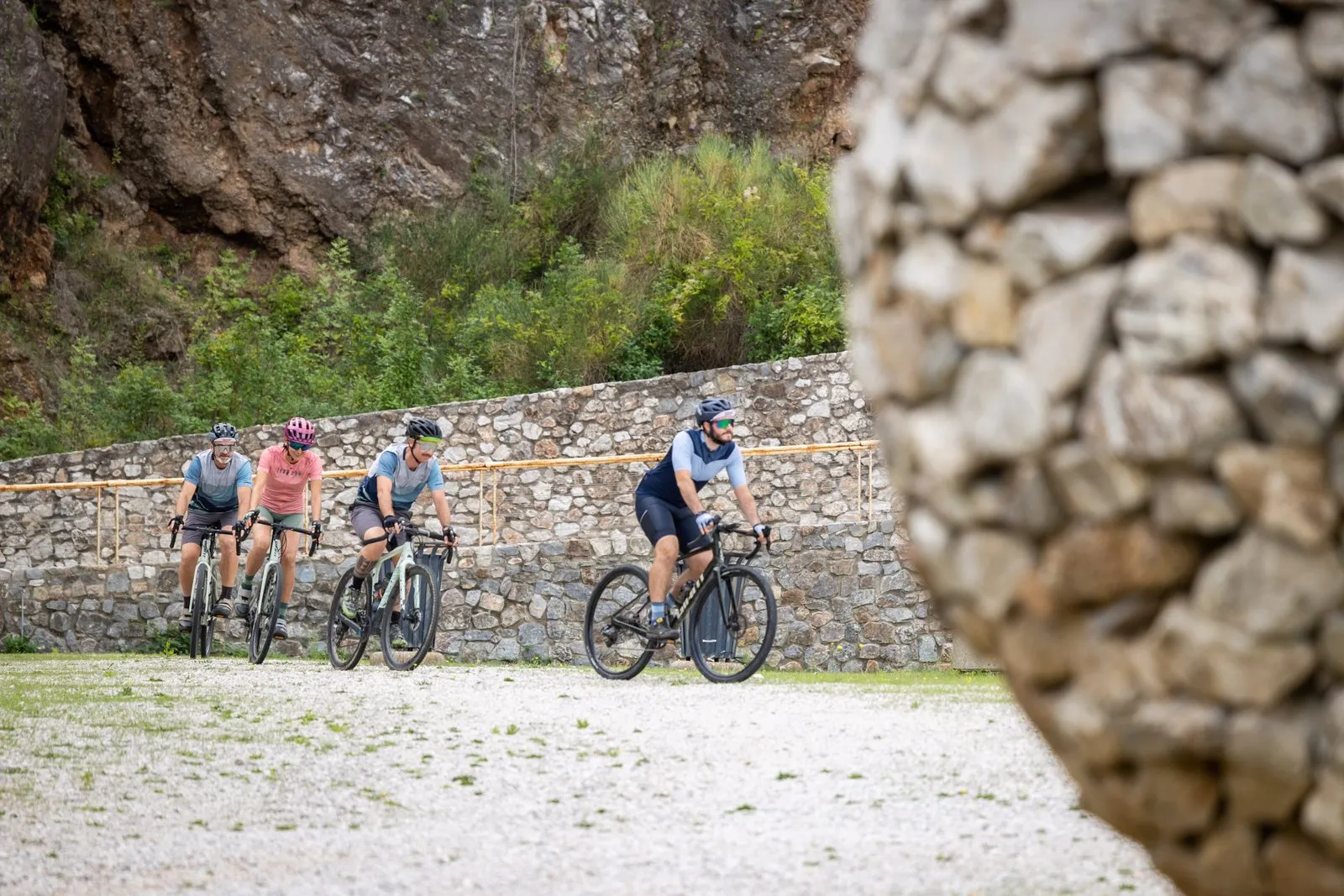
The story unfolds naturally amid this “castled” landscape of economy and territory, rising from gravel-stirred dust and red earth. Past Cala Martina stand massive silos that once held pyrite transported from Scarlino’s railway station. These industrial remnants—silos, loading tunnel, and yards—now showcase nature’s reclamation of the jagged coast. In the late 19th century, Scarlino ranked among Europe’s major mining centers.
Today, whether you’re cycling the coast, enjoying the sea, exploring the medieval village, venturing into hill forests, discovering archaeological sites, tracing mining history, riding coastal rock ridges, walking forest paths, or savoring Maremma cuisine, remember: Scarlino’s true treasure lies in the time you take to explore, understand, and cherish it.